Hands-on
A red mug, please. Will everything else stay?
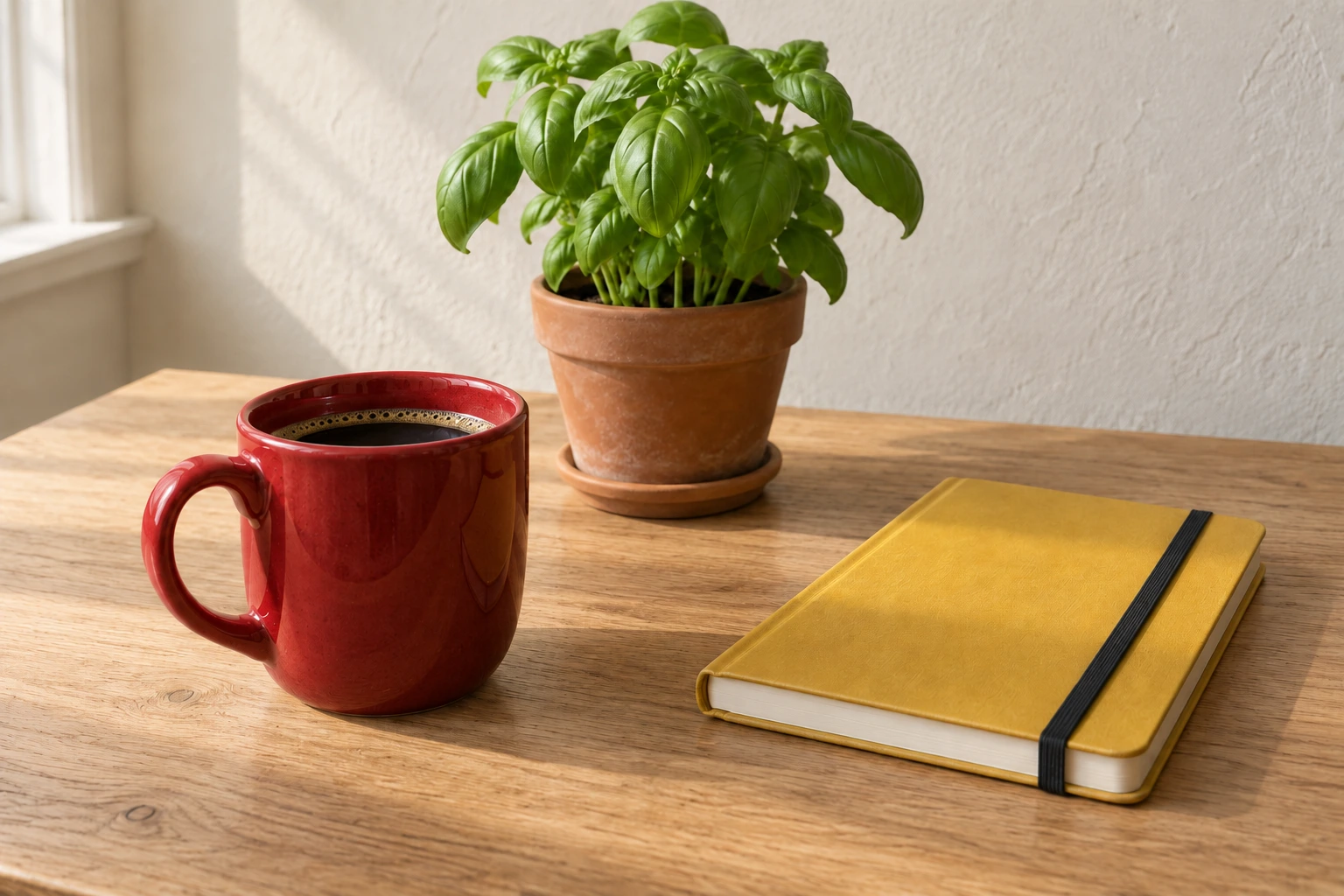
The mug turned red and the scene stayed recognisably the same. Even so, colour values outside the mug changed too.
You want to change just one colour. The rest of the picture should stay as it is.
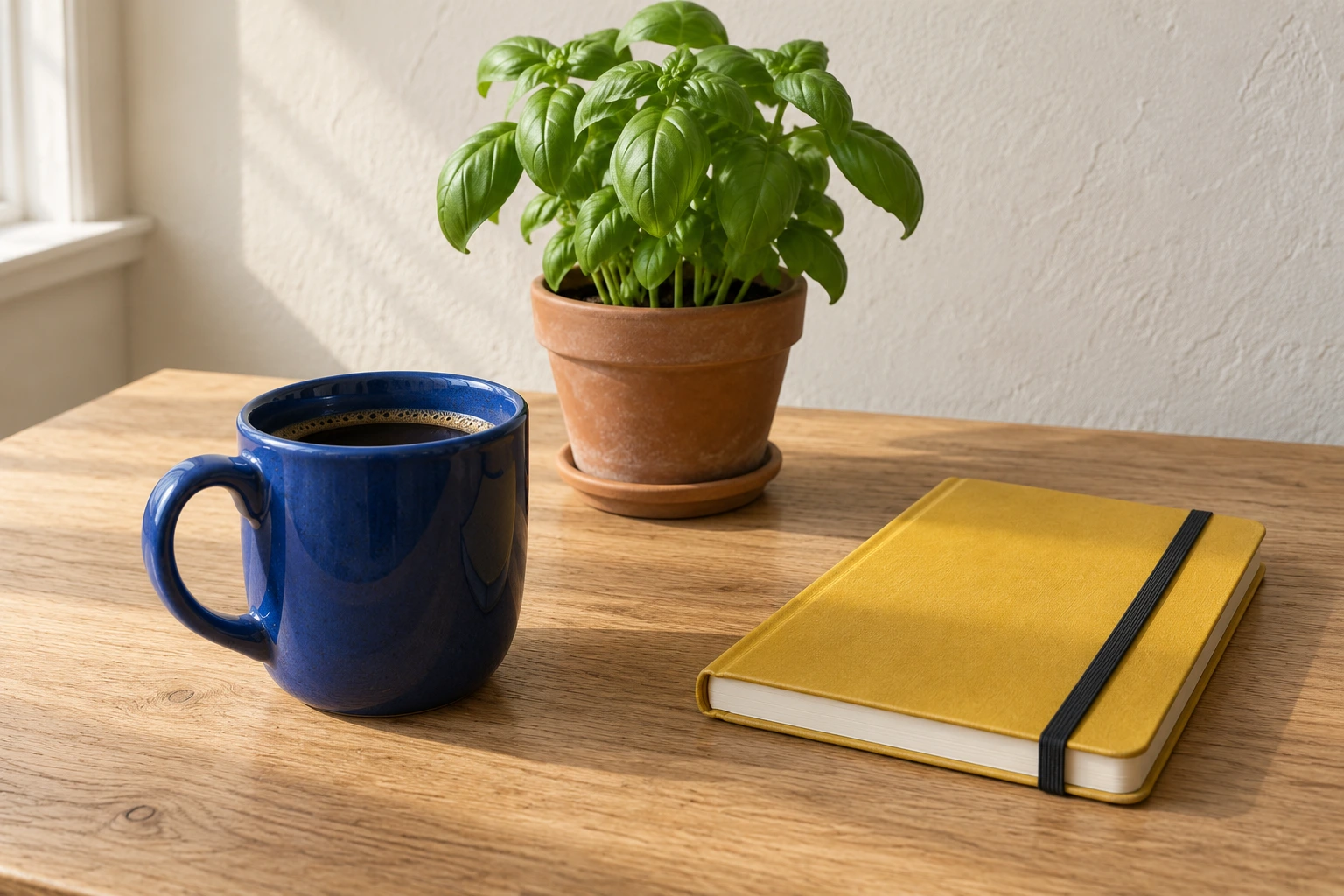
We tried this with a simple table scene: a blue mug, a yellow notebook and a basil plant. Both the starting image and the edit were made with AI for this article. It is not a photo of a real desk.
Write down first what must stay
The change was small and easy to check: cobalt blue was to become warm red. The mug’s shape and position, the coffee, handle and shadow were to stay the same. The notebook, elastic strap, plant, pot, wood grain, window, lighting and crop were explicitly on the list too.
A list like this turns “make it nicer” into a clear request. Suppose you want to change only the background of a product photo for your club’s flyer. Then the product’s shape, lettering and accessories belong on the list of things that must stay. In our trial, we deliberately used no people and no readable text.
Before: blue mug
How the trial went
On 10 October 2026, we first generated the table scene with the built-in image tool in Codex. Then we gave exactly that image to the same tool along with an editing instruction. There was exactly one edit, so we didn’t pick the best of several attempts.
The instruction was to change only the mug to warm red, keep the other objects, shadows, lighting and crop unchanged, and add or remove nothing. The full English wording is in the trial record.
Both original files are 1536 × 1024 pixels. The tool did not say which model or version it used. So we give no guessed model number and make no claim about any particular free plan.
After: red mug
What we see in the result
The mug is red. The handle, coffee, notebook, black elastic strap and plant visibly sit in the same places. The crop and lighting look the same in a side-by-side comparison.
That doesn’t mean the rest was copied unchanged. Comparing the original files shows different colour values outside a generous rectangle around the mug as well. This can happen, for example, because the image was recalculated. On its own, that doesn’t mean any object actually changed.
The visible arrangement was kept well, but we did not get a pixel-exact change limited to the mug. Whether small differences matter depends on what you need the image for.
How to check your own result
First look at what was supposed to change: is it right for what you need? Then look at the places you wouldn’t normally notice. Do edges, shadows, spacing and background details still fit?
For a birthday invitation or a first idea, looking the same is often enough. But if product details, documented damage or other evidence must stay exact, an AI result is not a reliable copy of the original. Keep the starting file separately. And disclose the edit wherever the image might otherwise be taken for a real photo.
One change at a time
If the result isn’t right, adjust the request narrowly. “Only the outside of the mug, not the coffee” is easier to judge than a new request that changes colour, background and viewpoint all at once.
This one trial shows an approach for this particular scene. It gives no success rate and no comparison of image editors. We did not try hands, faces, lettering or complex scenes. The two images do let you check our observation yourself.
Sources
- Hexpex: image trial and original instruction
Our single run with the built-in image tool, 10 October 2026. Original files, instruction and limits of the observation documented.